June 7, 2026
Fairies in British Folklore: Not Quite the Creatures of Children’s Books
Say the word fairy today and a familiar figure tends to appear: tiny, winged, bright, fond of flowers and generally safe to invite into a nursery illustration. British folklore contains that image, but it did not begin there.
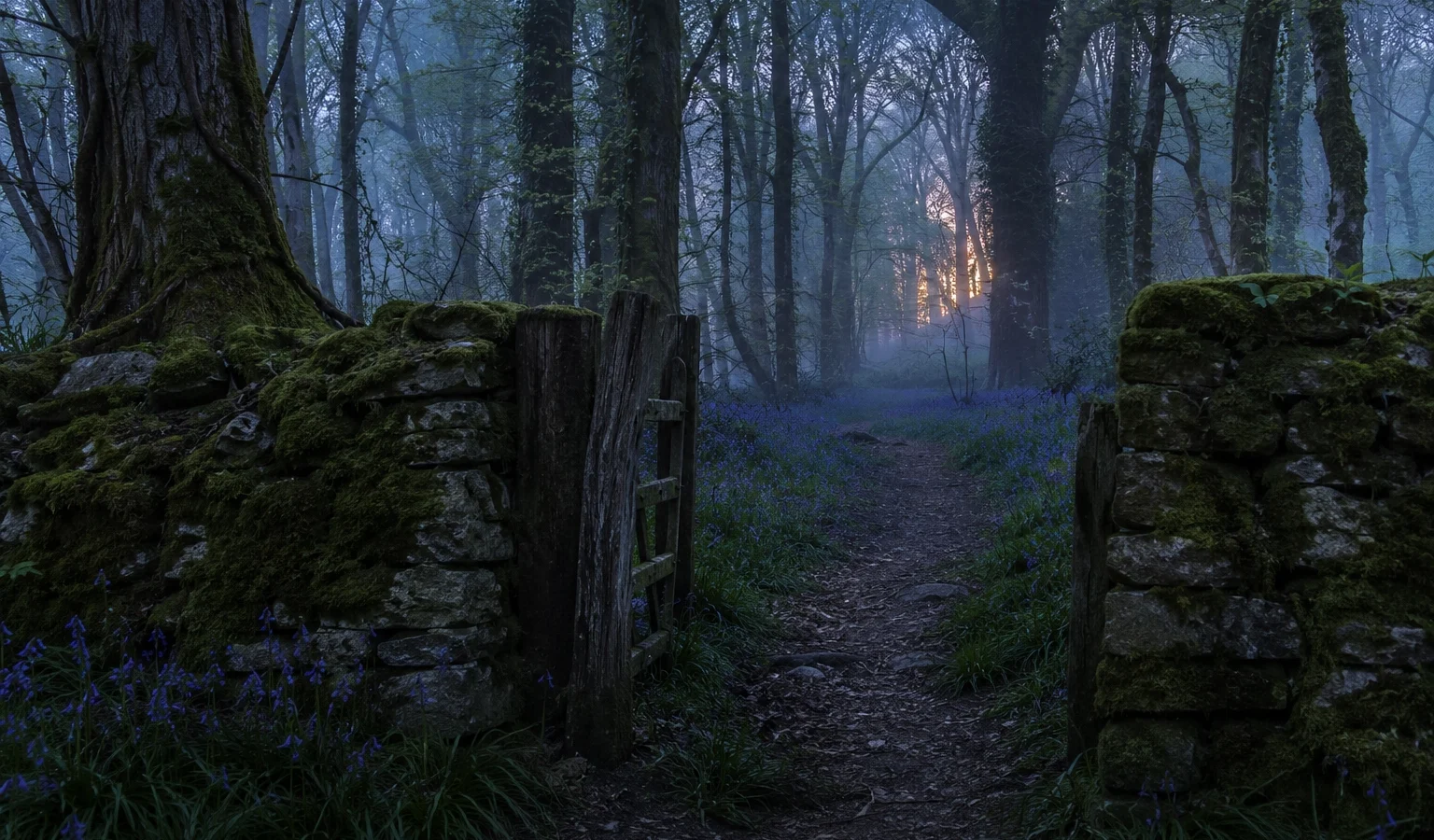
To understand fairies in British folklore, it helps to set aside the tidy storybook image for a moment and return to local stories, landscape, caution, courtesy and memory.
Older fairy traditions are far less tidy. Their beings may look almost human or distinctly strange. They may help with household work, lead travellers astray, guard a place, spoil milk, reward courtesy, punish intrusion, dance in groups, live beneath hills or simply vanish when a story seems about to explain them. Some are small; others are not. Some are dangerous; others are generous; many are both, depending on the tale.
Even the word fairy is a broad modern umbrella. Scottish Gaelic, Welsh, English and regional traditions preserve different names, stories and expectations. Treating them all as one species with a fixed list of powers creates a creature that belongs more to modern fantasy taxonomy than to folklore.
A better introduction begins with variety.
The safest first rule is not to ask what fairies are, but where this particular fairy story was told.
Why fairies in British folklore are not one single creature
Fairies in British folklore were shaped locally, and Britain’s fairy traditions were never one neat national system.
A story from the Scottish Highlands may describe beings associated with fairy mounds and an otherworldly society that resembles human life in unsettling ways. A Welsh account may attach fairies to a particular cave, field or boundary remembered by a family. Northern English stories have hobs and boggarts around farms and households. West Country traditions give us pixies who confuse travellers. Border folklore has its own darker figures.
These traditions overlap, borrow and change, but they are not interchangeable.
That matters because lists headed “the ten rules of British fairies” often flatten several centuries and several cultures into one internet-friendly system. Folklore rarely behaves so obediently.
The safer rule is almost the opposite: ask where a story was recorded, when, by whom, and what name the storyteller actually used.
| Tradition or setting | Typical fairy material in the article | Grounded reading |
|---|---|---|
| Scottish Gaelic material | Fairy mounds, near-human encounters, household beliefs and changeling traditions | Read through named places, local terminology and recorded belief, not as one universal fairy system. |
| Welsh oral memory | Family warnings, caves, boundaries and twentieth-century remembered stories | Treat the account as evidence that a story lived in memory and shaped behaviour. |
| Northern English households | Hobs, boggarts and domestic beings around farms and homes | Notice how fairy lore can turn household work, disorder and reciprocity into story. |
| West Country and road traditions | Pixies, confusion, lonely routes and travellers led astray | Keep the geography attached; a traveller’s warning is not automatically a national rule. |
| Victorian and children’s imagery | Wings, flowers, miniature figures, illustration and theatre | Accept it as a later historical layer without projecting it backwards onto all older traditions. |
Older fairies in British folklore were not necessarily tiny
The miniature winged fairy is so visually successful that it can feel ancient.
Yet many older accounts do not describe fairies that way.
Historic Environment Scotland’s overview of Gaelic fairy folklore notes that Highland fairies could be close enough to human size that an encounter might not immediately reveal what they were. Size was often less important than behaviour, place and the uneasy question of whether the stranger belonged entirely to the human world.
Elsewhere, British tradition certainly includes smaller beings. Household spirits can be diminutive, and later artists delighted in placing tiny figures among leaves and flowers. The point is not that “real old fairies were always human-sized”. It is that there was never one compulsory scale.
Wings are similar. They are now one of the quickest visual signs for “fairy”, but many traditional narratives do not need them. A being can cross a boundary, disappear or move unnaturally without the storyteller stopping to describe a pair of insect wings.
Why fairies in British folklore often belong to places
Fairy stories are frequently stories about places.
This is why fairies in British folklore are often easier to understand through place than through appearance.
Hills, caves, old tracks, wells, woods, rings in grass, lonely stretches of moor and particular stones can become attached to traditions about another people living close to ordinary human life.
That attachment does not prove that a prehistoric mound was built for fairies or that an unusual hollow contains an entrance to another world. It shows how later communities used visible landscape to organise story and memory.
Historic Environment Scotland, for example, notes that ancient burial monuments could acquire later names as fairy mounds. Archaeology tells us about the physical monument; folklore tells us what later people imagined or said about it. Both are historical evidence, but they answer different questions.
This is one reason our guide to why folklore clings to real places is useful alongside fairy stories. The age of a hill and the age of the story attached to it are not automatically the same.
How fairies in British folklore appear close to human society
Older fairy traditions can feel uncanny precisely because their beings are not completely alien.
They form households. They dance, work, marry, quarrel, borrow, steal, reward and retaliate. They may possess cattle, music, tools or domestic arrangements that resemble human ones while operating under unfamiliar rules.
The resemblance allows fairy stories to reflect ordinary concerns at one remove.
A failed crop, missing object, sick animal or unexplained change in a child could be interpreted through the language available to a community. In Gaelic material, fairies were sometimes blamed for taking the “goodness” from milk or substituting a changeling. Today those stories are important records of belief and anxiety, not diagnoses or explanations we should revive.
In particular, changeling traditions need careful handling. Historical stories sometimes attached supernatural explanations to illness, disability, developmental difference, infant distress or maternal crisis. Those beliefs could lead to fear and harm. Their existence is part of folklore history; repeating their assumptions as fact is not.
Helpfulness is rarely the same as harmlessness
One of the pleasures of British fairy lore is its resistance to simple moral categories.
Household beings may complete work if treated properly and withdraw if offended. A supernatural stranger may offer a gift with conditions. A traveller may receive help and still be warned not to ask too much. A beautiful encounter may carry a cost that becomes clear only later.
This does not mean every old fairy story is grim.
Many are comic. Some are generous. Some explain luck, craftsmanship or an unexpected escape. Others seem to delight in the idea that human beings are not quite as clever as they think.
But the relationship is often conditional rather than sentimental.
That is why the euphemistic language around fairies is so interesting. Respectful names such as “the Good Folk” can express courtesy without proving that the beings were understood as uniformly good. Our companion article on why British tradition treats the Fair Folk with caution explores that etiquette in more detail.
Welsh memories show folklore living into modern times
Fairy belief did not disappear neatly at the end of some imagined “ancient” period.
Museum Wales preserves twentieth-century oral recordings in which people remembered fairy stories as part of family and neighbourhood life. One account by Ifan Gruffydd, born in 1896, recalls being warned as a child not to cross a boundary near a cave because fairies were associated with the place.
The value of such a recording is not that it proves fairies occupied the cave.
It proves something more historically useful: the story was alive in memory, attached to a specific landscape and capable of influencing a child’s behaviour. It also shows how folklore works socially. Stories were heard from mothers, neighbours and older people, often in domestic settings, and were remembered with a mixture of fear, pleasure and fascination.
That mixture is easy to lose when folklore is reduced to a dictionary entry.
Fairy stories can function as boundary stories
Many traditions become especially vivid at edges.
A child is warned away from a cave. A traveller leaves the known road. A person enters a hill. A field has a path that should not be blocked. A ring in grass becomes a place where ordinary behaviour is suspended.
The supernatural element makes the boundary memorable.
It would be too simple to say that every fairy story was invented as a practical safety lesson. Folklore does not need one hidden rational purpose. But stories can certainly make rules, anxieties and local geography easier to remember.
“Do not wander there alone” is useful advice. “The fairies may take you if you cross that point” is advice with narrative teeth.
Why gifts and bargains matter so much
In many stories of fairies in British folklore, encounters test reciprocity.
Something is given, but gratitude matters. Work is performed, but payment must be appropriate. Hospitality is offered, but the guest must understand that eating, accepting or refusing may carry meaning. A promise can bind more tightly than expected.
These motifs make sense in communities where exchange and reputation mattered intensely. They also make excellent stories because they create a problem: what looks like a gift may actually be a relationship.
Modern retellings sometimes turn these motifs into universal supernatural rules. That goes further than the evidence allows. Different stories disagree, and collectors recorded variants rather than a single fairy legal code.
The interesting part is the pattern of conditional exchange, not the invention of a definitive rulebook.
Fairy etiquette is less a list of commandments than a reminder that hospitality, promise and trespass mattered.
How Victorian Britain reshaped fairies in British folklore
The nineteenth century did not invent British fairy tradition, but it transformed the way many people pictured it.
Britain experienced a major revival of interest in folklore, fairy tales, Gothic fiction and illustrated books. The British Museum notes the nineteenth-century enthusiasm for folklore and fairy-tale material among writers and illustrators. Artists such as Richard Doyle created elaborate fairy worlds, while theatre increasingly used spectacular scenery, lighting and transformation effects for fairy-tale productions.
This visual culture encouraged fairies to become more pictorially distinctive.
Miniature bodies, wings, flowers, moonlight and woodland detail all work wonderfully in illustration. They give the artist an immediate visual vocabulary. They also suit children’s publishing, decorative art and theatrical spectacle.
That process did not simply erase older material. Victorian fairy painting could still be strange, sensual, comic or unsettling. But it helped establish an image that later children’s books could soften further.
The flower fairy is part of history too
It would be a mistake to respond by declaring children’s fairies “fake”.
They are part of the later history of the tradition.
Illustrators, writers and publishers inherit older motifs, select some, discard others and create new combinations. A fairy among bluebells may not resemble a Gaelic daoine sìthe, but it tells us something about the period and audience that produced it.
The problem appears only when the later image is projected backwards and presented as a timeless description of what people across Britain always believed.
Folklore becomes clearer when change is allowed to remain visible.
Fairy tales and fairies in British folklore are not quite the same thing
The phrase fairy tale creates another useful confusion.
A literary or international wonder tale may contain magic without containing anything resembling British local fairy belief. Conversely, a local fairy legend may be a short account tied to one cave, family or field rather than a long adventure involving kings and enchanted castles.
Museum Wales distinguishes different narrative forms in its folklore collections, including international tales of magic and local legends connected with belief and place.
This distinction helps explain why Cinderella tells us little about whether a Welsh family avoided a particular cave, and why an oral account of fairy music on one hillside need not resemble a conventional storybook fairy tale.
Collectors preserve stories, but they also shape them
Much of what we know about earlier fairy traditions survives because antiquarians, folklorists, clergy, writers and later professional researchers wrote stories down.
That preservation is invaluable.
It also introduces another layer. A collector chooses what to record, how to spell dialect, whether to translate a local term as fairy, how much context to include and whether to tidy a story for publication.
A nineteenth-century folklore book is therefore evidence of the tradition it records and of the nineteenth-century act of recording it.
Good reading keeps both in view.
Modern fantasy has created a new taxonomy
Contemporary fantasy fiction, games and online communities often organise supernatural beings into systems: courts, species, powers, alignments and fixed weaknesses.
That can produce excellent fiction.
It should not automatically be backdated into folklore.
Terms such as Seelie and Unseelie, for example, have historical roots in Scottish tradition, but modern popular culture often expands them into far more systematic political structures than older sources require. The same happens when every regional being is assigned a precise biological category.
Folklore is usually messier because it grew through stories rather than a central rulebook.
Why people still return to fairies in British folklore
Fairy lore offers a way to imagine a world that is close to ours but not governed entirely by our expectations.
The stories give agency to landscape. They make hospitality consequential. They turn household disorder into narrative. They allow beauty and danger to occupy the same figure. They also preserve old voices describing what frightened, amused or puzzled them.
For a modern reader, none of this requires pretending that every tradition is a literal field guide.
It is enough to read the stories carefully.
Ask where they came from. Notice how different regions describe different beings. In that sense, fairies in British folklore are best approached as a family of local traditions rather than a single creature type. Compare oral memory with later illustration. Keep archaeological evidence separate from the legends attached to monuments. Treat harmful historical beliefs honestly. And resist the temptation to simplify every fairy into either a harmless sprite or a horror creature.
A Hawthorn & Key approach to fairy folklore
At Hawthorn & Key, fairy folklore is most interesting when its contradictions are left intact.
The tiny winged figure belongs in the history, but so does the almost-human stranger near a hill. The helpful household spirit belongs there, and so does the being that punishes intrusion. The children’s book, the Victorian painting, the Gaelic account and the Welsh oral recording all matter — provided we do not pretend they come from the same moment or say exactly the same thing.
British fairy lore is not a single bestiary entry.
It is a long conversation between landscape, memory, fear, courtesy, imagination and art.
Sources & Further Reading
- Historic Environment Scotland, “Scary fairies! Scotland’s Gaelic fairy folklore”, on Gaelic names, appearance, household beliefs, changelings and fairy mounds.
- Museum Wales, Folk Tales collection, including oral recordings, transcripts, narrative classification and contextual notes.
- Museum Wales, Ifan Gruffydd’s memories concerning fairies, an oral-history example of twentieth-century childhood belief, place and family storytelling.
- The Folklore Society, “Old Faery Narratives of Britain and Ireland”, for the variety of beings and motifs represented in older narratives.
- British Museum, “Prints of darkness”, for nineteenth-century British interest in folklore, fairy tales and supernatural print culture.
- Richard Doyle, In Fairyland: A Series of Pictures from the Elf-World (1870; illustrations first issued in 1869), as an important example of Victorian fairy imagery.
- Katharine Briggs, An Encyclopedia of Fairies, for comparative British fairy terminology and traditions; useful as a reference work, but best read alongside regional and primary collections.
- Jacqueline Simpson and Steve Roud, A Dictionary of English Folklore, Oxford University Press.