August 24, 2026
Cunning Folk: The Healers, Finders and Charmers of English History
For several centuries, an English person faced with a stolen purse, a mysteriously ill cow, an unexplained fever or the fear of witchcraft might turn not to a witchfinder, but to someone described as cunning. To understand cunning folk in England, it helps to begin with these ordinary problems rather than with the later image of the village sorcerer.
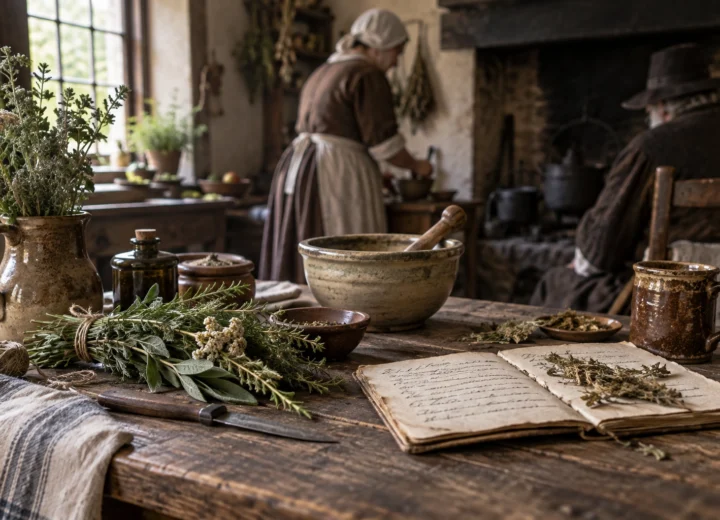
The phrase cunning folk sounds quaint now, and modern culture often turns such figures into rustic sorcerers standing at the edge of a village. The historical record is more interesting. Cunning folk in England were practical specialists. They diagnosed problems, found lost goods, offered charms, treated illness, told fortunes and advised clients who believed that malice, witchcraft or bad luck had entered their lives.
They did not form a single profession with a licence, training system or agreed theology. Some were well known across large districts. Others practised occasionally. Some charged money; some received gifts. Some used astrology and books. Others worked with prayers, divination, herbs or inherited formulas. The common feature was usefulness: people went to them because they wanted something done.
What did “cunning” mean for cunning folk in England?
In older English, cunning could mean knowledge or skill. A cunning person was not necessarily deceptive in the modern sense of the word. The label could imply someone who possessed unusual knowledge, especially knowledge useful in difficult situations.
Historical sources use many overlapping names: wise man, wise woman, cunning man, cunning woman, charmer, conjuror, soothsayer, fortune-teller, wizard and, in some regions, white witch. Cornwall preserved names such as pellar. Local speech mattered, and one practitioner’s reputation might produce several labels at once.
Modern historians sometimes use the broader term service magician because it emphasises what such people did. They provided magical services to clients. This service role is one of the clearest ways to understand cunning folk in England without forcing them into a single religious or professional category.
Their customers came with ordinary problems
The surviving cases make clear that the work of cunning folk in England belonged to ordinary life.
Research into English court depositions has found people consulting magical practitioners over theft, sickness, missing property and suspected witchcraft. The service could resemble investigation, medicine, counselling and ritual all at once.
A stolen animal might be economically devastating. A sick child might have no obvious diagnosis. A household experiencing repeated accidents might suspect an enemy. The cunning practitioner offered an explanation and, often, a course of action.
We should not confuse this social usefulness with evidence that the magical methods worked as claimed. What the records demonstrate is demand. People were willing to travel, pay, ask questions and follow instructions because they believed the specialist might help.
| Common service | What a client might want | What the evidence can show |
|---|---|---|
| Finding stolen goods | A thief identified or missing property located | That clients sought and sometimes paid for divinatory help |
| Healing | Relief from illness or unexplained symptoms | What remedies, prayers or charms were used, not that they were medically effective |
| Counter-witchcraft | An explanation for misfortune and a protective response | How beliefs about harmful magic shaped behaviour and accusation |
| Charms and protection | A portable or household object associated with safety or luck | How words and objects were given protective meaning |
Finding stolen property was one of their most important jobs
Modern portrayals tend to focus on healing and charms, but finding stolen goods was a major part of the reputation of cunning folk in England.
A practitioner might use astrology, scrying, a sieve and shears, a book and key, written calculations or other forms of divination to identify a thief or indicate where property had gone.
This work sat uneasily beside formal justice. A client might treat the divination as useful intelligence. Authorities could treat the same activity as fraud, superstition or an improper accusation against an innocent neighbour.
The practice also created danger. Once a diviner named a supposed thief, suspicion could harden into communal certainty without the sort of evidence a modern court would require.
Healing could include prayer, herbs and magical diagnosis
Cunning folk in England worked in a medical world very different from our own. Professional physicians, surgeons, apothecaries, midwives, household remedies, religious devotion and magical therapies all existed at the same time, but access to them was unequal.
A cunning practitioner might use herbs, touch, spoken charms, written words, bodily materials or ritual actions. Some remedies may have included ingredients with genuine pharmacological effects. Others rested on symbolic associations, religious language or magical belief.
That mixture is historically important because it resists the modern urge to sort every act into either “medicine” or “magic”. A person in the seventeenth century could understand illness through physical, spiritual, providential and interpersonal explanations at once.
None of this makes a historical charm a modern medical treatment. The purpose of studying it is to understand what people thought they were doing and why they trusted the practitioner.
Counter-witchcraft brought cunning folk close to the world of accusation
One of the most characteristic services of cunning folk in England was the diagnosis or reversal of suspected witchcraft.
A client whose livestock failed, child sickened or household suffered repeated misfortune might believe that someone had bewitched them. The cunning person could confirm or reject that suspicion, name a possible culprit, recommend a protective charm or prescribe a countermeasure.
This is why the easy distinction between “good cunning folk” and “bad witches” can be misleading. The two roles belonged to the same wider belief system. A cunning practitioner might be asked to defend clients against witchcraft, yet critics could regard that practitioner’s own methods as illicit magic.
Some writers used the word witch for harmful and healing practitioners alike. Others distinguished them sharply. Local reputation mattered more than any universal classification.
Many cunning practices were deeply Christian
The image of the cunning person as the keeper of a secret pre-Christian religion has little support as a general explanation.
The practices of cunning folk in England could make extensive use of Christian material. Prayers, divine names, biblical passages, crosses and invocations of sacred authority appear beside astrology, charms and divination.
Jim Baker’s study of English cunning magic between 1550 and 1900 stresses this Christian environment. Owen Davies likewise places cunning folk inside ordinary English society rather than outside it as members of a hidden pagan church.
That does not mean church authorities approved. Religious language could be used in ways clergy regarded as superstitious or presumptuous. A prayer used devotionally and a prayer used as a guaranteed technique for recovering stolen property were not necessarily judged in the same way.
Cunning practice becomes easier to understand when prayer, divination, healing and commerce are allowed to overlap historically instead of being forced into modern categories.
Books mattered more than the rustic stereotype suggests
Some cunning folk in England were highly textual practitioners.
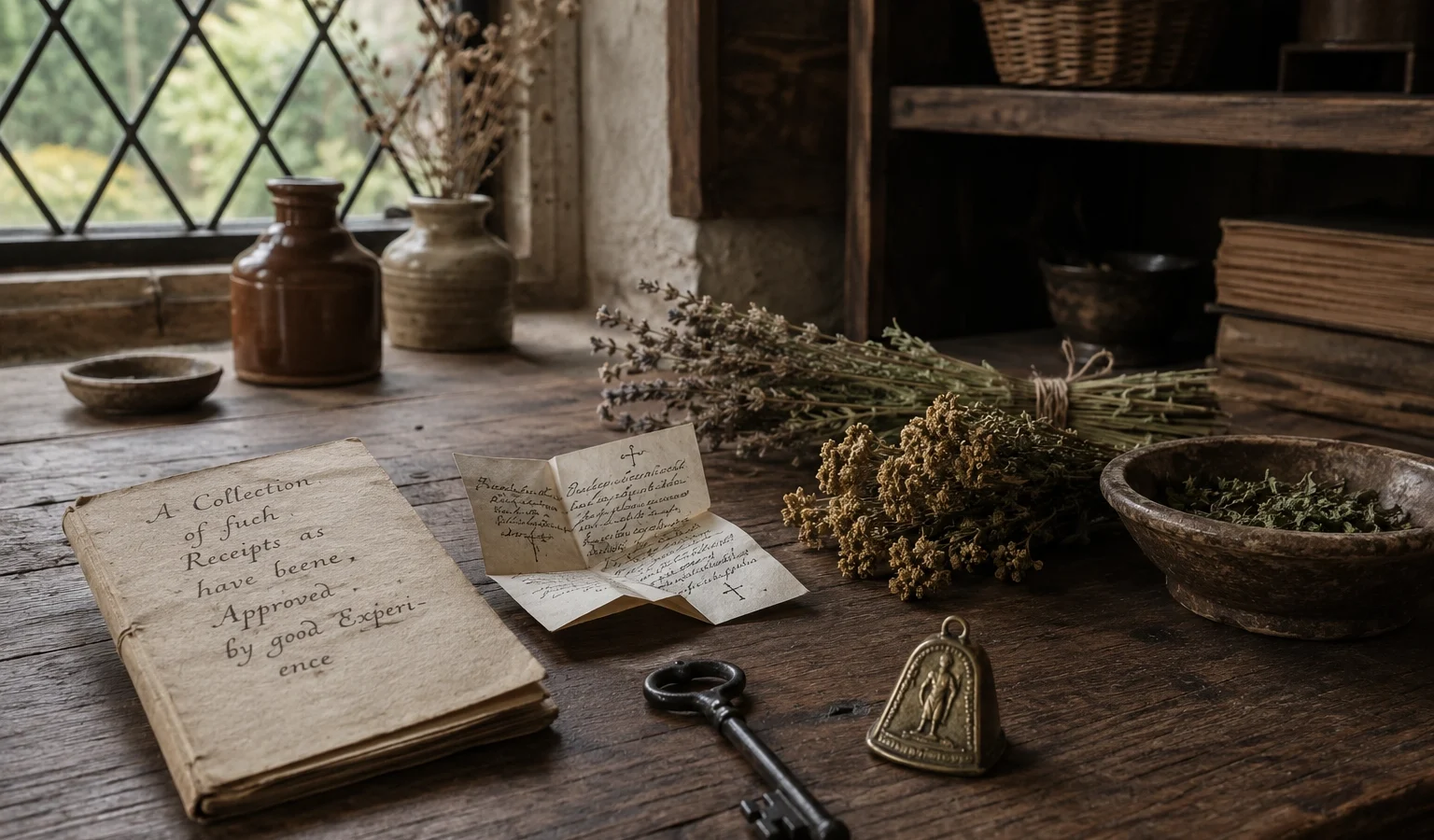
They copied charms, consulted astrological material, used almanacs and preserved handbooks. Literacy varied, but practical magic could draw upon printed and manuscript culture as well as oral tradition.
This makes the old opposition between “learned magic” and “folk magic” less secure than it first appears. Techniques and texts moved between social levels. Elite astrology, religious formulas and popular charms could meet in the same practitioner’s work.
A rural client might therefore consult someone whose authority came not simply from inherited village lore, but from possession of books, diagrams or technical vocabulary that looked learned and mysterious.
Written charms turned words into portable objects
The Museum of Witchcraft and Magic preserves small charm bags that once contained folded written material. Such objects demonstrate how words could become things, and they give the history of cunning folk in England a material form beyond court testimony and printed description.
A written charm might be carried against illness or misfortune. Folding, enclosing and wearing the text altered its role: it was no longer only something to be read, but something to be kept physically close.
This material side of cunning practice matters. Historical magic was often tactile. Paper, fabric, thread, metal, herbs, wax, pins, bottles and household structures all gave beliefs a physical form.
Our broader guide to folk magic in Britain looks at that wider world of charms and protective objects.
Men and women both practised, but the record is shaped by gender
The phrase wise woman has become so familiar that it can suggest that practical magic was primarily women’s work. Women certainly practised as healers and charmers, but men were also prominent among cunning folk in England.
Research from English legal records suggests that particular services could be gendered in the way they were described. Men appear frequently in work involving stolen property or formal divination, while women are often associated with charms, healing and accusations of harmful speech or witchcraft.
But the archives themselves are selective. Court records preserve conflict, accusation and criminal suspicion more readily than quiet successful relationships between practitioner and client.
It is therefore safer to speak of patterns than rigid rules.
Were cunning folk respected or feared?
Often both.
A successful practitioner could acquire a regional reputation and attract clients from miles away. Knowledge that seemed useful could bring status. At the same time, unusual knowledge could produce suspicion.
A person believed capable of reversing witchcraft might also be imagined capable of causing it. A practitioner who confidently named thieves risked anger. Someone who failed repeatedly could be accused of fraud.
Reputation was therefore a form of protection and vulnerability at once.
Why did people keep consulting them?
Part of the answer lies in gaps left by other institutions. The persistence of cunning folk in England makes more sense when we remember how limited many other forms of practical help could be.
Modern Britain has police databases, veterinary medicine, professional healthcare, insurance, counselling, social services, forensic evidence and rapid communication. Earlier communities had very different resources.
A cunning practitioner could offer something remarkably comprehensive: an explanation of what had happened, a person to blame or avoid, an action to perform and the reassurance that a problem was being addressed.
That psychological and social usefulness should not be confused with proof of supernatural power. It does help explain why such specialists remained attractive even when clergy, physicians or magistrates disapproved.
Cunning folk and the witch trials
Cunning folk in England could become entangled in witchcraft prosecutions in several ways.
They might be consulted before an accusation developed. Their diagnosis might intensify suspicion against a neighbour. They could appear as witnesses. Occasionally they themselves became targets.
Historians have therefore warned against treating “white” and “black” magic as completely separate social worlds. People who feared harmful witchcraft often believed in protective magic for the same reason: both depended upon the assumption that hidden influences could cause ordinary misfortune.
This becomes especially important in cases such as the Lancashire witch trials, where healers, local reputations, poverty, conflict and supernatural accusations intersected in ways later popular storytelling tends to simplify.
The tradition lasted far beyond the early modern witch trials
Cunning practice did not disappear when England’s major period of witch prosecution ended.
Owen Davies has traced cunning folk in England well into the nineteenth and early twentieth centuries. Newspaper reports, folklorists and surviving objects document continuing belief in magical practitioners long after industrialisation.
In Cornwall, specialists known as pellars or conjurors continued to be consulted over ill-wishing and misfortune. In other regions, charmers and wise people retained local reputations.
Modernity changed the setting but did not instantly erase the demand for practical magic.
What survived into modern witchcraft?
Modern magical movements have inherited or revived some features associated with cunning practice: herbs, charms, divination, protective objects, written spells and household ritual.
But continuity should not be assumed simply because the materials look similar.
Twentieth-century Wicca, contemporary Paganism, modern folk magic and commercial occult practice developed in new social and religious environments. They often borrowed from folklore collections and historical scholarship, but they also created new systems and meanings.
The difference matters. Historical cunning folk were usually service providers embedded in local problems, not members of a standardised modern spiritual identity.
A grounded way to remember the cunning folk
At Hawthorn & Key, cunning folk in England are most interesting when they are allowed to remain historical people rather than turned into fantasy archetypes.
They occupied an uncertain space between healer, diviner, investigator, religious specialist and neighbour. They could reassure frightened clients, reinforce dangerous suspicions, preserve old charms, adopt new printed techniques and charge for knowledge that other institutions could not provide.
The history of cunning folk in England reminds us that practical magic was not confined to dramatic witch trials. Much of it belonged to quieter moments: a missing animal, a sick child, a folded charm, a question asked in private because ordinary explanations did not feel sufficient.
Sources & Further Reading
- Owen Davies, Popular Magic: Cunning-folk in English History.
- Tabitha Stanmore, Cunning Folk: Life in the Era of Practical Magic.
- Jim Baker, The Cunning Man’s Handbook: The Practice of English Folk Magic 1550-1900.
- University of Exeter, Forms of Labour project, “The Magiconomy of Early Modern England”.
- Institute of Historical Research, Reviews in History, discussions of witchcraft, magical healers and cunning practice.
- Museum of Witchcraft and Magic, written charm amulet, and library record for The Cunning Man\’s Handbook.
- Keith Thomas, Religion and the Decline of Magic.