Online lists often reduce this question to the Mohs hardness scale: softer minerals are declared unsafe, while harder ones receive permission to be immersed. That rule is unreliable. Gypsum and rock salt can dissolve, some pyrite specimens deteriorate in damp conditions, and several comparatively soft gems can be cleaned with warm, soapy water when handled correctly.
The sensible starting point is to identify the material, consider the length of contact and consult a source concerned with its physical care. There is little reason to expose a mineral to water merely to find out what happens.
Which stones should not go in water? The short answer
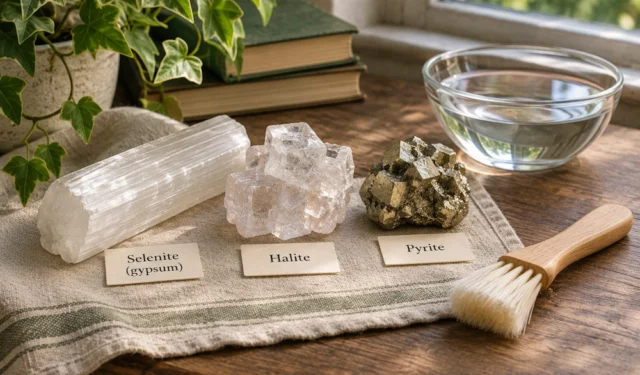
For ordinary home collections, gypsum (including selenite and satin spar), halite and moisture-sensitive pyrite deserve particular caution. Unidentified minerals, heavily treated gems and objects assembled with glue or metal fittings should also be kept out of soaking bowls until their care requirements are known. These are different kinds of risk, so they should not be placed under one vague label such as “water toxicity”.
For a crystal whose identity or treatment is uncertain, begin with a soft, dry brush. Water should be a deliberate cleaning choice, not a default ritual.
When deciding which stones should not go in water, distinguish a delicate specimen intended for display from a cut gem in professionally made jewellery. Instructions for one cannot automatically be applied to the other.
Gypsum, selenite and satin spar
Selenite is a transparent form of gypsum. The fibrous, pearly white wands and towers often sold under that name are generally satin spar gypsum. Both contain the same mineral, and gypsum is soluble in water. The U.S. Geological Survey includes gypsum among highly soluble evaporite deposits.
A splash is unlikely to make a specimen disappear before your eyes. Repeated washing or prolonged immersion, however, can erode a surface and damage fine fibrous detail. There is no practical benefit in leaving gypsum submerged to “cleanse” it.
Care: dust gently with a clean, dry, soft brush. Avoid soaking and routine rinsing; store delicate pieces away from persistent damp.
Halite and decorative salt crystals
Halite is sodium chloride, the mineral form of common salt. In water it dissolves readily. A halite specimen, salt crystal or decorative salt object can lose its shape and surface detail if rinsed or soaked. Humidity also matters for long-term display, particularly where salt begins to attract moisture.
Care: keep halite dry, handle it with clean hands and remove dust with a soft brush. This is one of the clearest answers to which stones should not go in water.
Pyrite: a moisture problem, not a salt-like dissolution problem
Pyrite is iron sulphide, often called fool’s gold. It should not be grouped with halite as though the two minerals dissolve in the same way. Susceptible pyrite specimens can oxidise in the presence of moisture and oxygen, producing iron sulphates and acidic by-products that damage the specimen and its surroundings.
The Canadian Conservation Institute identifies relative humidity above about 50% as a concern for vulnerable pyrite. Not every polished or massive piece will crumble after a brief accidental splash, but extended soaking and damp storage introduce avoidable risks.
Care: dust dry, maintain stable storage conditions and pay attention to unusual powdering or crumbling. A deteriorating specimen may need specialist conservation advice.
Unknown minerals and mixed specimens
A blue polished stone without a reliable label may be dyed quartz, glass or something else entirely. A raw cluster may contain several minerals, each with different behaviour. Without identification, even a confident-looking water-safety chart has little to work with.
Before deciding which stones should not go in water in a mixed collection, check labels and purchase records. If you cannot establish what the object is, dry dusting is the prudent option. Do not use soaking, vinegar or scratching as improvised identification experiments.
Water exposure is not one single activity
A damp cloth touches a surface briefly. Washing under a gentle stream usually lasts seconds, while a bowl of water keeps the object wet for much longer. A stone left in water overnight faces an exposure that ordinary jewellery-cleaning instructions seldom recommend. Water temperature and cleaning chemicals add another set of variables.
This distinction matters when a care guide says a gem can be cleaned with warm, soapy water. It means that carefully controlled washing is an acceptable method for the material described. It does not establish that indefinite soaking is harmless, especially when the item has unknown treatments or fittings.
People asking which stones should not go in water often have ritual immersion in mind, while scientific and gemmological guidance is usually written for removing dirt. The purpose and duration of the contact need to be made explicit before the advice can be compared.
Why Mohs hardness cannot tell you whether a crystal is water-safe
The Mohs scale describes resistance to scratching. It does not measure solubility, moisture-driven chemical change, porosity or the stability of a resin treatment. Nor does a high hardness value protect a specimen from damage caused by a fragile crystal structure or existing fractures.
Gypsum is soft and soluble; the two properties happen to occur together, but one does not explain the other. Opal is relatively soft, yet the Gemological Institute of America (GIA) recommends warm, soapy water for appropriate cleaning. Other risks, including heat and rapid temperature changes, may matter more.
A chart that tells you which stones should not go in water solely from their hardness number will therefore make mistakes. Reliable advice begins with mineral chemistry and the particular specimen’s condition.
Minerals that need a more qualified answer
Malachite, calcite and fluorite are repeatedly named in social-media lists of stones that must never touch a drop of water. Their care does warrant attention, but the explanation is different for each material. Broad claims can turn sensible precautions into needless alarm.
Malachite
Malachite is a copper carbonate hydroxide mineral. Cutting or grinding it raises a dust-exposure concern; swallowing mineral material is a separate risk. Neither situation is equivalent to briefly wiping an intact, polished ornament with a slightly damp cloth.
For routine home care, avoid acids, abrasive cleaning and unnecessary immersion, especially when coatings or other treatments are unknown. Porous gemstones can absorb cleaning solutions, as discussed in GIA’s guidance on treatments. Keep mineral specimens away from food preparation and drinking water.
Calcite
Calcite reacts with acids and scratches relatively easily. Vinegar is therefore an especially poor universal “crystal cleaner”. Plain water is a different question: calcite is not as readily soluble as halite, although water chemistry and prolonged exposure can affect carbonate surfaces.
A dry, soft brush is adequate for many display pieces. If more cleaning is needed, seek advice for the exact specimen and avoid rough scrubbing. The decision about which stones should not go in water cannot be reduced to whether a mineral sits below a particular Mohs number.
Fluorite
Fluorite can cleave along distinct planes and may chip or fracture if handled carelessly. Its relative softness and cleavage are reasons to avoid hard brushes, knocks and abrupt temperature changes; they are not evidence that ordinary water instantly dissolves it.
Fragile fluorite clusters rarely gain anything from soaking. Keep crystal edges supported and remove dust carefully. If the object is a polished gem with a known treatment, follow that item’s care guidance rather than a blanket rule from a crystal-shop list.
Which gemstones can be washed gently?
Guidance on which stones should not go in water is incomplete unless it also recognises the materials that tolerate a brief wash. Professional care recommendations differ from the uncompromising “never wet” lists circulated online.
GIA permits warm, soapy water for several familiar gems, including amethyst, rose quartz, tourmaline and peridot. Heat, thermal shock, fracture filling and unsuitable cleaning equipment can still damage a gem even when a little water is acceptable.
The same nuance applies to turquoise. GIA describes warm, soapy water as safe for cleaning turquoise jewellery, but warns against steam, ultrasonic cleaning and conditions that damage treated surfaces. Its advice concerns sensible washing, followed by drying, rather than prolonged soaking.
For opal, GIA also recommends warm, soapy water. Opal can be sensitive to high heat and abrupt temperature change. As with any assembled or treated object, it is worth checking whether a particular piece has features that require more conservative handling.
Treatments and jewellery settings can change the answer
A mineral may tolerate mild washing while its dye, coating, fracture filling, wax or polymer treatment needs special care. GIA’s overview of gem treatments explains how different treatments affect durability and cleaning recommendations. A stone sold without accurate treatment information should not be assumed to behave like an untreated specimen.
Whole objects matter too. A crystal tree may include metal wire, a figurine may be glued to a base, and a piece of jewellery may contain elastic, cord, settings or adhesive. A safe method for the central mineral can still damage another component.
When assessing which stones should not go in water, look beyond the mineral name on the shop label. Care for the most vulnerable component, and choose a dry method where uncertainty remains.
Crystal water care at a glance
| Material or situation | Practical approach | Reason |
|---|---|---|
| Gypsum, selenite, satin spar | Avoid soaking and routine rinsing | Water-soluble mineral; surface detail may be lost |
| Halite or rock salt | Keep dry | Dissolves readily in water |
| Susceptible pyrite | Avoid soaking and damp storage | Moisture can encourage oxidation |
| Unknown or mixed specimen | Dry clean until identified | Minerals and treatments may differ |
| Dyed, coated or fracture-filled stone | Check treatment-specific advice | The treatment may be less stable than the gem |
| Glued or composite object | Consider every component | Adhesives, wire and fittings may be vulnerable |
| Malachite, calcite or fragile fluorite | Prefer conservative dry dusting | Different chemical or mechanical sensitivities |
| Amethyst, rose quartz, tourmaline, peridot | Gentle warm, soapy water if suitable for the actual item | GIA-approved care for these gem types |
| Turquoise and opal | Brief, gentle washing as appropriate; avoid aggressive methods | GIA guidance permits mild washing with cautions |
This table addresses common examples of which stones should not go in water for extended periods. It cannot establish the treatment, condition or construction of a specimen you have not identified.
How to clean a mixed collection with less risk
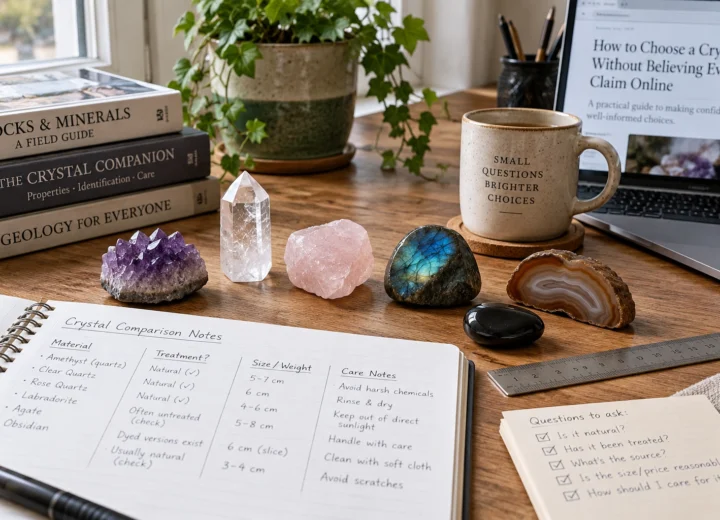
A collection often grows one attractive purchase at a time, and accurate labels tend to disappear long before the stones do. A modest cleaning routine is easier to maintain when you know what you own. Keep mineral names and treatment notes with the collection, particularly for raw or unusual specimens.
- Identify before cleaning. Check the invoice, label or dealer’s description. If uncertain, do not test a mineral in water.
- Remove loose dust dry. Use a soft brush and gentle handling. Avoid rubbing delicate points or fibrous surfaces.
- Check the care advice for the exact material. Jewellery guides and museum conservation guidance answer different questions; both can be useful.
- Inspect how the object is made. Look for glue, metal, string, coatings and existing cracks before considering a wash.
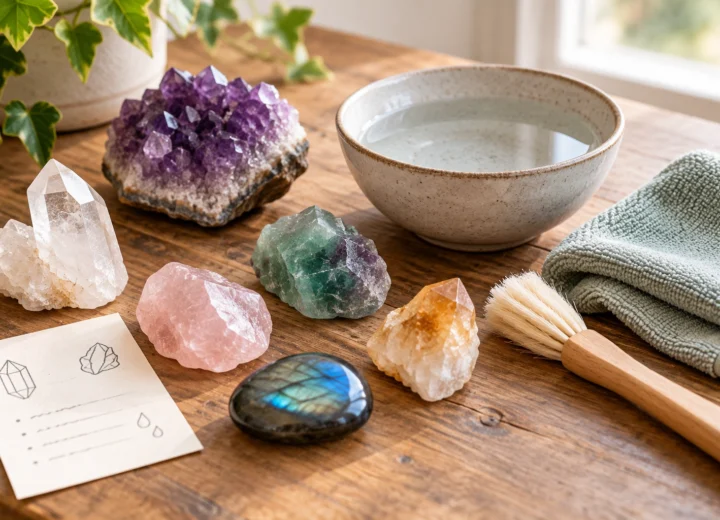
- Wash only when appropriate. Use mild soap and comfortably warm water where the material’s care instructions permit it; do not extend the contact unnecessarily.
- Dry carefully. Follow the item’s guidance and avoid storing moisture-sensitive pieces while damp.
If you are searching for which stones should not go in water because you want to freshen a shelf, remember that most settled household dust can be removed without water. Our guide to cleaning crystals safely covers everyday methods in more detail, while storing and displaying crystals at home deals with light, spacing and supporting heavy pieces.
Keep decorative minerals out of drinking water
Placing a mineral in a drinking glass is a different activity from cleaning a gemstone. A decorative specimen is not supplied as a food-contact product. It may carry residues, unknown treatments, soluble compounds or mineral components that have never been evaluated for ingestion.
Do not prepare “crystal elixirs” by leaving unidentified stones in water you intend to drink. Even when a mineral has a reputation for harmlessness, the precise composition and treatment of a retail object may be uncertain. Put the stone beside the vessel if the arrangement has personal symbolic meaning.
Lists describing which stones should not go in water for cleaning do not provide drinking-water safety certificates for the stones omitted from those lists. The safe boundary for ingestion should be treated separately.
A Hawthorn & Key approach to crystal care
At Hawthorn & Key, caring for crystals begins with the ordinary material in front of you. Gypsum and halite need protection from water because they dissolve; pyrite raises questions about moisture-driven chemical deterioration. Treated gemstones and assembled objects add their own complications. None of this is adequately explained by a single hardness threshold.
The question of which stones should not go in water becomes easier once the mineral is identified and the proposed exposure is clear. There is room for personal symbolism in the way a collection is displayed or handled, provided that the practice does not damage the object or create unnecessary risks.
Sources & Further Reading
- U.S. Geological Survey, Sources of Dissolved Solids in Brackish Groundwater. Geological context for soluble gypsum and halite.
- Canadian Conservation Institute, Caring for Natural History Collections. Relative humidity and vulnerable pyrite specimens.
- Gemological Institute of America, An Introduction to Gem Treatments. Treatment-related durability and care concerns.
- Gemological Institute of America, Turquoise Care and Cleaning Guide.
- Gemological Institute of America, Opal Care and Cleaning Guide.
- Gemological Institute of America, Amethyst Care and Cleaning Guide, alongside its gem-specific guidance for rose quartz, tourmaline and peridot.