The events themselves did not begin as folklore. The Pendle witch trials were criminal prosecutions conducted under Jacobean law, involving poverty, family conflict, local reputation, frightened witnesses, confessions, political ambition and a legal culture willing to accept supernatural harm as a serious offence.
Ten people convicted at Lancaster were hanged on 20 August 1612. Another accused woman from the same wider group, Jennet Preston, had already been tried and executed at York. Elizabeth Southerns, known as Old Demdike, died in Lancaster Castle before she could be tried.
Much of what survives in detail comes through a source that is both invaluable and difficult: Thomas Potts’s The Wonderfull Discoverie of Witches in the Countie of Lancaster, published in 1613 by command of the judges.
The Pendle records are richest when read as evidence of a prosecution and its memory, not as a transparent transcript of supernatural events.
How the Pendle witch trials began
The Pendle witch trials began with a comparatively small incident. On 18 March 1612, Alizon Device met a travelling pedlar, John Law, on the road near Colne. According to the later account, she asked him for pins. He refused, and soon afterwards collapsed.
In a society where sudden illness could be interpreted through providence, natural disease, witchcraft or all three, the event quickly acquired a supernatural explanation. Law’s family suspected Alizon. Local justice Roger Nowell became involved.
What might otherwise have remained a quarrel or medical incident became the opening of a much larger investigation.
Two families already carried reputations for magic
The Device family and the family of Anne Whittle, known as Old Chattox, lived in and around Pendle Forest. Elizabeth Southerns, or Demdike, Alizon’s grandmother, had a long-standing reputation associated with healing, begging and magical practice. Chattox and her family had a similar reputation.
That reputation matters because the Pendle witch trials did not emerge from nowhere. Accusations grew more readily around people whom neighbours already believed capable of unusual power.
The two families were also rivals. Long-running disputes, poverty and mutual suspicion formed part of the social background.
It is tempting to turn Demdike and Chattox into straightforward “cunning women”, but the source material does not allow such neatness. People could seek magical assistance from a person and fear that same person’s anger. Useful and dangerous reputations could exist together.
Our article on cunning folk in English history explores that ambiguous role more broadly.
Confessions and evidence in the Pendle witch trials
Potts records extraordinary confessions. Demdike is said to have described meeting a spirit called Tibb who appeared in several forms. Alizon confessed to harming John Law. Other testimony contains familiar spirits, clay images, curses and deaths attributed retrospectively to witchcraft.
These passages are some of the most vivid material connected with the Pendle witch trials, but they are mediated texts rather than untouched testimony.
The statements were produced during examinations before authorities, then selected and shaped for publication by a clerk writing a book approved by the judges. We do not possess an untouched recording of frightened people speaking in their own language.
That does not mean every statement was simply invented by Potts. It means the historian must distinguish what the printed account says from certainty about how the evidence was obtained, phrased or understood.
The Good Friday meeting at Malkin Tower
On Good Friday 1612, a gathering took place at Malkin Tower, the Device family home. Potts’s account presents it as a meeting of witches.
The surviving testimony describes food, family members and neighbours. It also alleges discussion of plans involving Lancaster Castle and the imprisoned suspects.
Whatever the gathering meant to those present, its discovery allowed the Pendle witch trials to expand dramatically. Attendance could become evidence of participation in a wider conspiracy.
This is one of the places where later retelling has often hardened uncertainty into certainty. “Malkin Tower witches’ sabbath” sounds much more definite than the surviving evidence deserves.
Jennet Device and child testimony
One of the most disturbing elements of the Pendle witch trials was the use of child testimony.
Jennet Device, a young girl, gave evidence against members of her own family and other accused people. Potts records her identifying those present at the Malkin Tower gathering and speaking against her mother, Elizabeth Device.
Her testimony became central partly because English law was changing. The 1604 Witchcraft Act and Jacobean concern with witchcraft created a setting in which extraordinary evidence could be taken seriously.
Modern retellings sometimes portray Jennet as a uniquely malicious child. That is too easy. She was a child inside an adult investigation, examined by authorities and inserted into a prosecution whose consequences she could not have controlled in any modern sense.
Law, procedure and the Lancaster Assizes
Early seventeenth-century criminal procedure was very different from a modern trial.
The accused did not have defence lawyers in the modern sense. They were expected to respond to allegations themselves. Evidence that would now be treated as hearsay, coercive or speculative could influence jurors.
Witchcraft prosecutions also involved a crime whose alleged mechanism was invisible. Illness, death, quarrels, dreams, reputation and confession could all become parts of a supernatural causal story.
It is nevertheless wrong to say that everyone accused of witchcraft was automatically convicted. Recent historical research on English juries has emphasised how often jurors acquitted or refused to indict suspects. Doubt existed even within a culture that took witchcraft seriously.
The Pendle witch trials were therefore not simply the inevitable operation of a uniformly credulous legal system. They were a particularly severe prosecution within a legal culture that still allowed room for doubt.
The trials took place over several days
The Lancaster Assizes at the centre of the Pendle witch trials dealt with several groups of accused people in August 1612.
Anne Whittle, Elizabeth Device and James Device were among those tried on 18 August. On 19 August the court also heard the case of the Samlesbury women, whose accusations collapsed and who were acquitted, before proceeding with further Pendle-related defendants.
The contrast matters. The same court capable of condemning the Pendle accused could reject another witchcraft case when it judged the evidence unreliable.
That does not make the proceedings fair by modern standards. It does show that belief in witchcraft did not eliminate every form of evidential judgement.
Ten people were executed at Lancaster
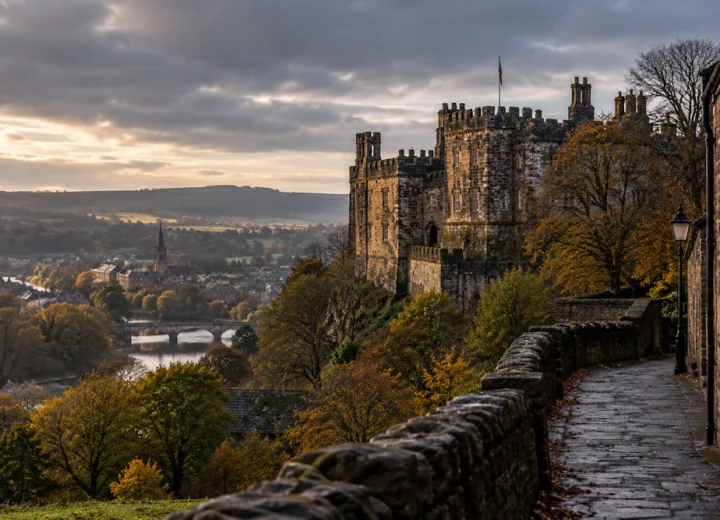
On 20 August 1612, ten people convicted at the Lancaster Assizes were hanged on the moors above the town.
They included Anne Whittle, Elizabeth Device, James Device, Alizon Device, Anne Redferne, Alice Nutter, Katherine Hewitt, Jane Bulcock, John Bulcock and Isabel Robey.
Elizabeth Southerns had died in prison before trial. Jennet Preston had been tried at York and executed earlier.
The precise burial places of those executed are not known. This makes later claims about individual graves particularly vulnerable to invention.
Lancashire County Council’s own historic collections explicitly warn against the popular claim that a Nutter family grave at Newchurch contains Alice Nutter simply because it bears the surname.
| Date | Event |
|---|---|
| 18 March 1612 | Alizon Device encounters John Law near Colne, beginning the chain of accusations. |
| Good Friday 1612 | A gathering at Malkin Tower becomes central to the expanding investigation. |
| Summer 1612 | Suspects are imprisoned and examined while the case develops. |
| 18-19 August 1612 | Trials take place at the Lancaster Assizes alongside other witchcraft cases. |
| 20 August 1612 | Ten convicted defendants are hanged on the moors above Lancaster. |
| 1613 | Thomas Potts publishes The Wonderfull Discoverie, giving the case much of its surviving narrative shape. |
| 1634 | Another Lancashire witchcraft case shows how memory of 1612 could influence later accusations. |
Alice Nutter and the gaps later memory tries to fill
Alice Nutter has become one of the best-known Pendle names, partly because she appears socially different from some of the poorer defendants.
Her refusal to confess and the relative silence of the record around her have encouraged later speculation about religion, politics and personal motive.
Some later theories may be plausible, but the surviving evidence does not allow plausibility to stand in for proof.
The false identification of a Nutter family tomb as Alice’s burial place is a useful example of how local landscape and historical absence can generate certainty long after the documents fall silent.
Thomas Potts and the printed memory of the Pendle witch trials
Without Thomas Potts, the Pendle witch trials would be much harder to reconstruct.
His 1613 book preserves examinations, names, allegations and the sequence of proceedings in exceptional detail. It is one of the most important primary sources for English witchcraft history.
Its detail should not be mistaken for neutral reporting.
Potts wrote under judicial authority. The book celebrates the competence of the judges and frames the condemned as dangerous witches whose guilt has been successfully exposed.
Its bias is part of its historical value because it shows both the accusations that were recorded and the way Jacobean justice wanted the prosecution remembered.
King James I and the national context
James VI of Scotland and I of England had written about witchcraft in Daemonologie before taking the English throne. The Witchcraft Act of 1604 strengthened penalties for certain offences involving spirits and harmful magic.
That royal context helped give prosecutions such as the Pendle witch trials political and religious importance.
Yet James should not be imagined personally directing the Pendle case from London. Local magistrates, neighbourhood accusations, assize judges and the circumstances of Lancashire drove the investigation.
The national climate mattered, but the prosecution was driven through local magistrates, neighbours and the assize system.
Poverty, begging and local conflict
Several of the accused lived precariously. Begging created repeated moments of negotiation between poor people and neighbours who controlled food, money or small goods.
A refusal could be followed by anger. If illness or misfortune then occurred, the quarrel might be remembered as a threat fulfilled.
Historians of witchcraft have repeatedly found this pattern in English communities: tense exchanges followed by unexplained harm could turn ordinary social conflict into a supernatural accusation.
That does not explain every allegation in the Pendle witch trials, but it helps restore the case to ordinary social life rather than treating it as an isolated eruption of superstition.
How the Pendle witch trials shaped later accusations
One of the most revealing later documents comes from another Lancashire witchcraft prosecution in 1634.
A boy named Edmund Robinson accused numerous people of attending a witch feast. During re-examination, he admitted that he had fabricated parts of the story after hearing neighbours talk about the earlier Malkin Tower gathering and the executions of 1612.
The National Archives preserves his statement.
This is important because it demonstrates, within a generation, how the Pendle witch trials had already become a narrative template. A famous prosecution did not simply record belief; it also helped shape later accusations.
Why the Pendle witch trials still shape Lancashire memory
The Pendle witch trials contain nearly every element later audiences associate with witch trials: older women with reputations for magic, familiar spirits, a disputed gathering, family testimony, a dramatic hill, a child witness and mass execution.
It is also unusually well documented. Potts gives the story characters and scenes in a way many trial records do not.
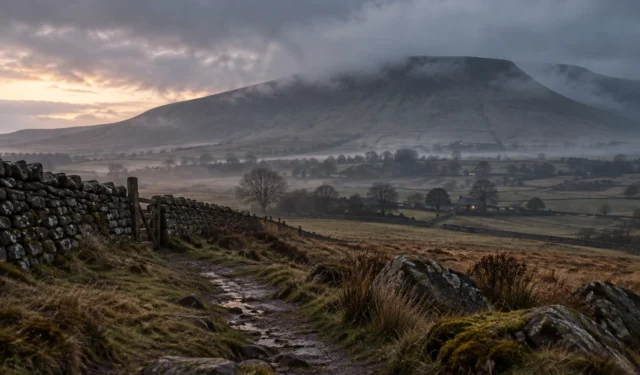
Modern tourism has added another layer. Pendle now contains trails, signs, events, art and local businesses that use witch imagery. The accused have become part of regional identity.
This later life of the story shows how a judicial tragedy can become folklore, heritage and commerce at the same time.
Remembering the accused without giving them modern identities
There is a strong modern impulse to reclaim people executed for witchcraft as actual witches, healers or Pagans persecuted for their beliefs.
That approach may be intended respectfully, yet it can replace one imposed identity with another.
Some Pendle defendants may have used charms, healing practices or magical language. Others denied the accusations. We should not require them to fit a modern spiritual category in order to treat their deaths as unjust.
The safest description is the historical one: they were people accused and convicted under early modern witchcraft law on evidence that would not meet modern standards.
A Hawthorn & Key approach to the Pendle witch trials
At Hawthorn & Key, the Pendle witch trials are best approached as both history and memory.
The hill, villages and surviving buildings deserve their atmosphere. The printed confessions deserve close reading. The local legends deserve preservation. But the people at the centre of the story should not disappear behind black cats, broomsticks and souvenir witch silhouettes.
The story endures because the surviving documents, the Lancashire landscape and later memory all meet around the lives of people caught in a prosecution with fatal consequences.
Sources & Further Reading
- Thomas Potts, The Wonderfull Discoverie of Witches in the Countie of Lancaster (1613), available in the Chetham Society reprint and Project Gutenberg transcription.
- Lancaster Castle, “The Pendle Witches”.
- The National Archives, Early Modern Witch Trials: Accusation and Trial, including the 1634 Lancaster evidence.
- Lancashire County Council, Red Rose Collections, Pendle and Lancashire witch-trial material.
- James Sharpe, The Lancashire Witches: Histories and Stories.
- Marion Gibson, work on English witchcraft trial narratives and print culture.
- Krista Kesselring, research on juries and doubt in early modern English witchcraft trials.